We want to buy good service businesses. We look for teams that can do the work, customers who come back and clear books. Our main focus is facilities maintenance and commercial service work.
Here is what we look for when we buy a business. These are the same topics we ask about in our first-look form.
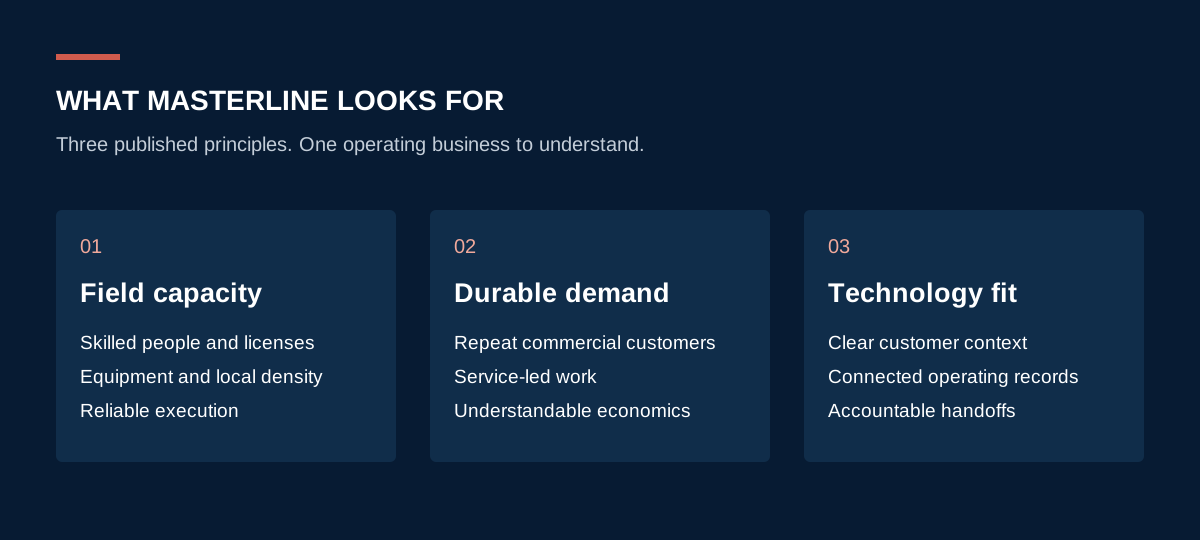
1. A business that can deliver the work
Tell us about your crew, licenses, trucks, tools and equipment. Where do you work most? How much work does your own team do? How much goes to outside trade partners?
Our main focus includes facilities maintenance, commercial plumbing, electrical service and handyman work. If you do another kind of facility work, tell us what it is and where you do it.
2. Demand that comes back
We want to know why customers call you again. How much work comes from businesses? How much is service and repair? How much comes from repeat customers? A repeat customer may call as needed, without a long-term contract.
Tell us how much of your sales comes from your largest customer. One big customer can shape the whole business. We need to understand that risk.
3. Economics with a clear source and period
We ask for sales and earnings from the past twelve months. Use your best range for now. Say which months it covers. Keep sales apart from profit. Flag any numbers that still need a check.
The form lists sales and earnings ranges to help us learn about the business. They are not price ranges or a promise to buy. A Masterline owner reviews each next step.
4. People and a workable transition
Who runs the day-to-day work? Which choices still need the owner? What does the owner want from a sale? Tell us about timing and any key legal, tax, safety, license or insurance issue.
We discuss the team, customers and the seller’s future role for each deal. The NCRC story shows one real deal. It is not a promise that every sale will have the same terms.
5. Technology that supports a sound operation
We look for a sound business first. Good tools can then help the team spend less time on office tasks. Software alone does not make a business a good fit.
MasterlineIQ (MIQ) was built by Tim Yslava for the family’s businesses. It links requests, visits, notes, photos and office records. These real jobs show how. People do and check the work. We do not have a set savings or return figure for each business we may buy.
What to prepare for the first conversation
| Subject | Useful initial information |
|---|---|
| Work and geography | Primary trades, customer types, headquarters and markets actually served. |
| Delivery model | Employee versus provider work, field team size and controlled equipment. |
| Demand and economics | Revenue and earnings ranges, repeat work and largest-customer share. |
| Transition | Owner responsibilities, timing, goals and material issues to discuss. |
Use this short checklist to get ready. Do not send customer lists, tax returns, bank details or private files through the first form.
Introduce your company
Owners and approved advisors can tell us about the business here. It is a first step for review. It is not an offer, a price or a promise to make a deal.
Based on Masterline’s published acquisition approach and initial fit questionnaire, reviewed October 20, 2026. Criteria guide an introductory review; they are not an offer or promised transaction terms.